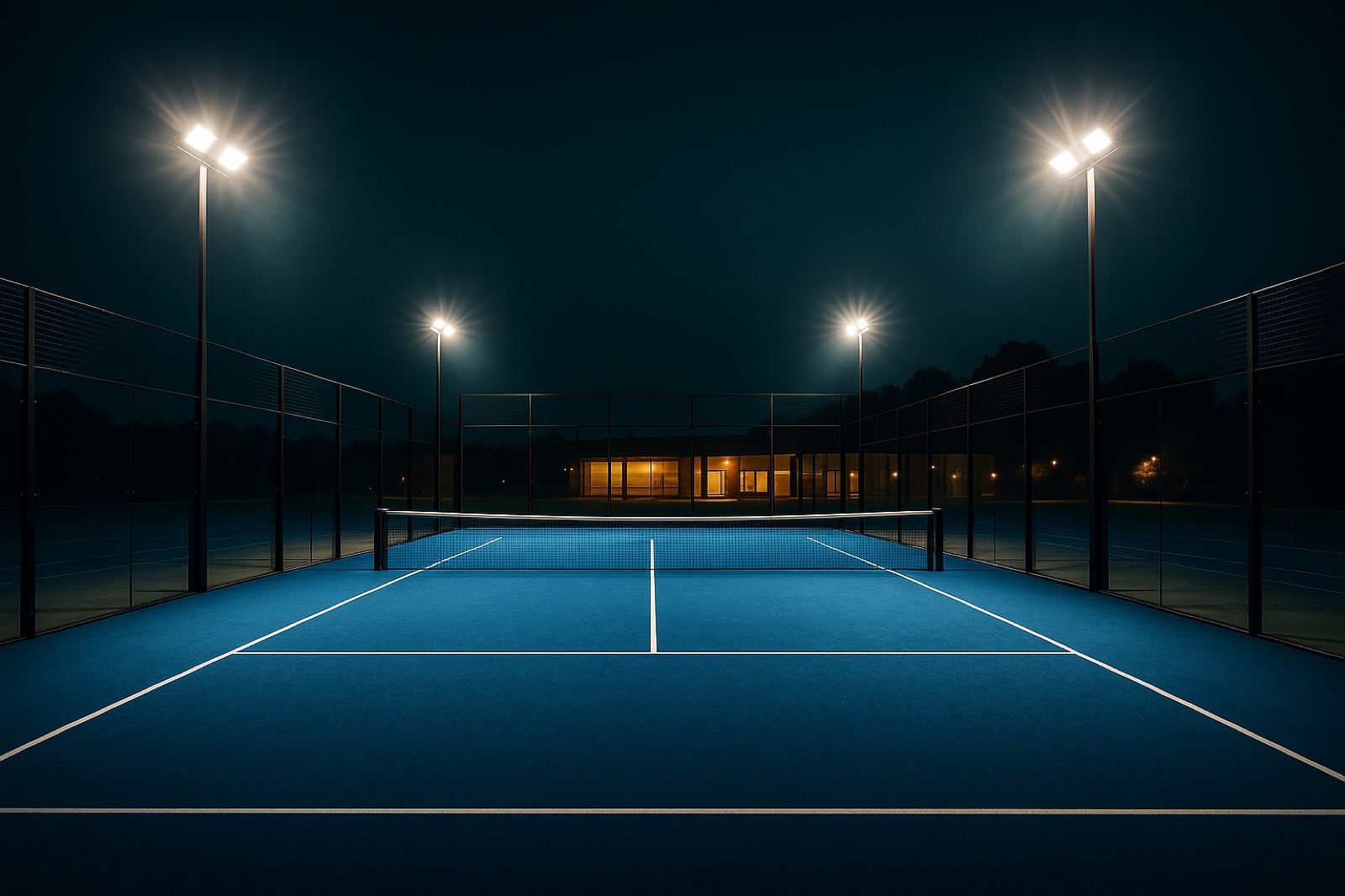
Premium padel court floodlit at night, lights managed automatically by the booking system

What is a "smart" padel court?

A smart padel court is one where the building thinks for itself. Instead of staff switching lights on and off, handing out keys, and hoping people leave when their hour is up, the court links directly to your booking platform. When someone books a slot on Playtomic, Padel Mates or any of the booking platforms players use, the court prepares itself: lights on, door unlocked, ventilation running. When the session ends, it tidies up after them. This guide explains each moving part — the same systems we design and install for padel clubs across the UK.

Player on an outdoor padel court in bright daylight, where smart daylight-aware lighting saves energy

1. Booking-linked lighting

The heart of the system. Court lights follow the booking calendar rather than a light switch:

Automatic mode

Every booking made on the club's platform — Playtomic and Padel Mates being the two players use most in the UK — switches the lights on and off itself. The club sets margins — say 15 minutes before and after — so a 09:00–10:00 booking lights the court from 08:45 to 10:15. Nobody touches a switch.

Daylight-aware mode

For outdoor or partially covered courts, lights only fire when natural light is insufficient. The system factors in time of day and location, so summer evening bookings may need no lights at all.

Manual override

Staff can take direct control for coaching sessions or maintenance — with safeguards so an override doesn't leave the floodlights burning all night.

Why it matters: lighting is one of the biggest running costs of an indoor padel club. Booking-linked control means you never pay to light an empty court, and members never arrive to a dark one.

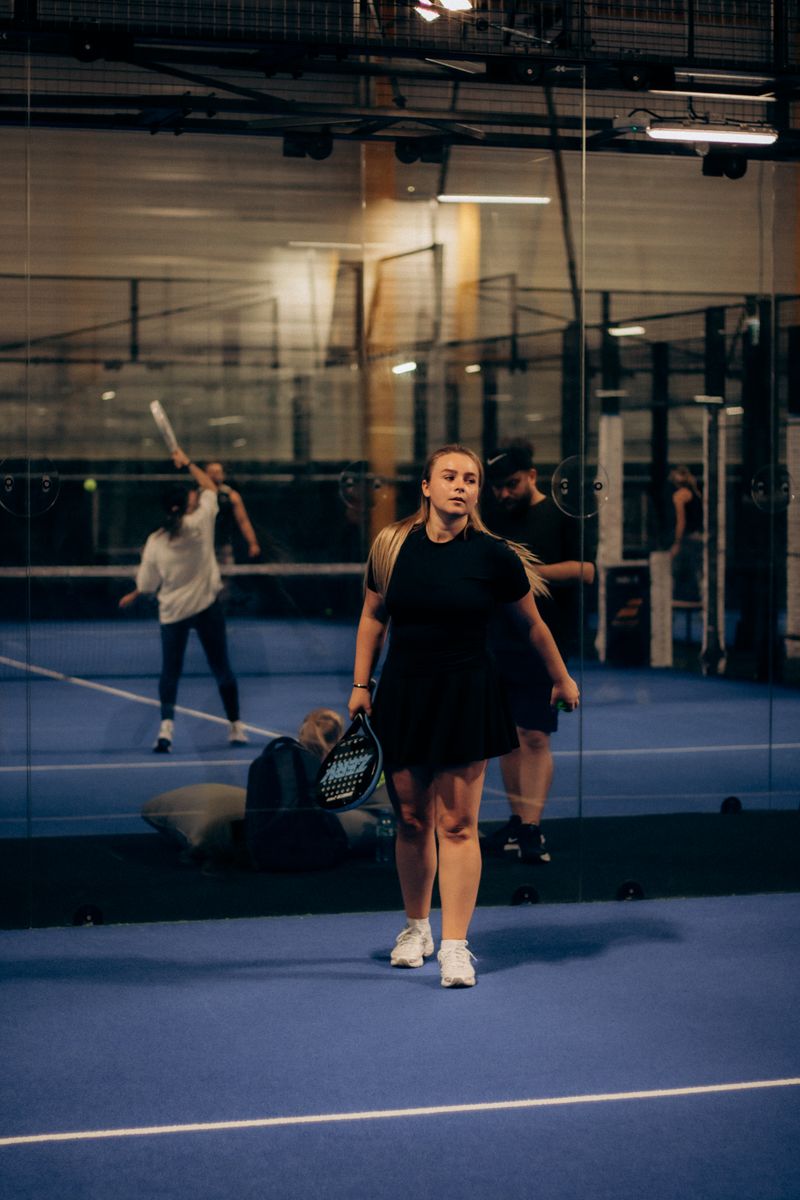
Player arriving at an indoor padel court, the door already unlocked for her booked slot

2. Access control — doors that follow the diary

The gate or door to each court unlocks itself for the right people at the right time:

  • Booking-window codes: each player receives a PIN valid only for their booked slot, issued automatically from the booking platform (Playtomic, Padel Mates, or the club's own system) — plus the same margins as the lighting. Arrive 10 minutes early, the door already knows you're expected.
  • Master codes: club managers hold permanent or day-specific codes for staff, coaches and cleaners.
  • Scheduled auto-unlock: for clubs that run open-access hours, doors can unlock themselves on a timetable — say 08:00–22:00 on weekdays — and lock outside those hours.
  • Remote release: staff can open any door from the control interface for deliveries, events or one-off visitors.

Why it matters: unstaffed and low-staffed clubs only work if the doors are trustworthy. Access control turns a padel club into a business that can run 6am–midnight without a receptionist on every shift.

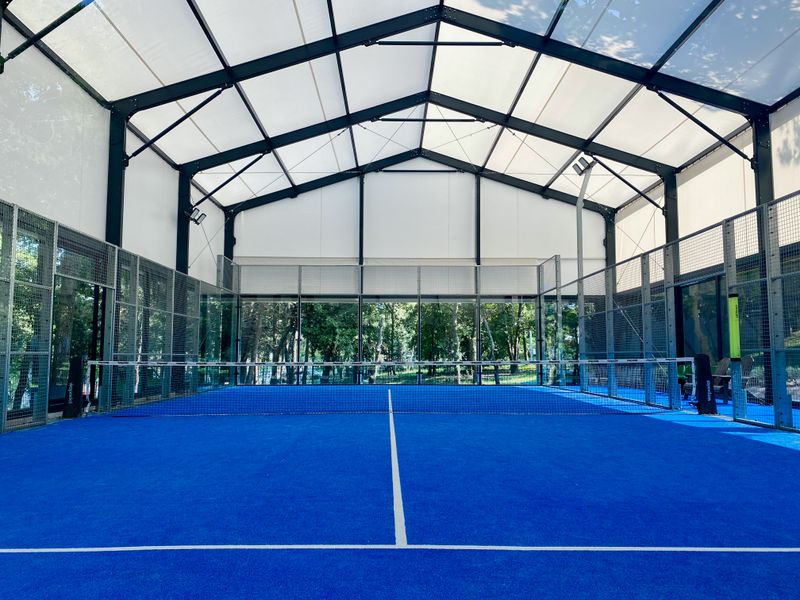
Spacious indoor padel hall — a large air volume that automated ventilation conditions only when booked

3. Ventilation & climate

Indoor padel halls generate serious heat and humidity — six players sprinting in a glass box. Automated ventilation synchronises with bookings: it can start 45 minutes before play to pre-condition the air, and run on after the session clears the humidity. Two integration approaches exist:

  • Relay control — simple on/off commands to the HVAC system, one relay per command (fan, speed, mode).
  • ModBus control — direct digital communication with the air-handling unit for finer control (fan speed, temperature setpoints), needs a driver matched to the specific HVAC model.

Why it matters: conditioning an empty hall is pure waste. Syncing ventilation to the diary is one of the easiest energy wins in the building.

Padel racket and balls on a court under low evening light — the presence sensor knows whether play is booked

4. Presence detection — the anti-freeloader system

Sensors on each court detect play when there's no active booking. The system then:

  • Plays an audio message asking the players to vacate or book
  • Notifies the club manager in real time
  • Can shut off lighting and other court systems until a booking appears

Why it matters: one persistent group of freeloaders can cost a club thousands a year in unbilled court time and electricity. Presence detection closes that gap entirely — and the audio warning resolves most cases without confrontation.

5. One interface for the whole club

Everything reports into a single web dashboard: every court's lighting mode, door state, keypad activity (the last code entered at each entrance), ventilation status and presence alerts. Managers can see at 3pm that court 3's lights have been on since 1pm with no booking — and act immediately. Ambient lighting (the softer non-playing light for walkthroughs and social areas) is managed separately, with its own "on during bookings or not" choice.

This is the layer we integrate with the rest of a club's technology — CCTV, licence-plate recognition at the car park, KNX building control and the booking platform — so everything reports to one place rather than five disconnected apps.

Booking platforms: the brain the court listens to

Almost every club in the UK takes bookings through an online platform — Playtomic and Padel Mates are the two you'll encounter most, alongside club-specific systems. The automation layer doesn't replace them; it plugs into them. The platform stays the player-facing app where courts are found, booked and paid for. Behind the scenes, the automation system watches the booking feed and drives the building: lights, doors, ventilation and sensors all key off whatever the platform says.

That's also where the margins come from — the same 15-minute buffers that light the court before a session unlock its door. Get the platform integration right and the whole club runs itself; get it wrong and you're resetting lights and doors by hand, which is exactly what the automation was meant to remove.

What does automation add to a court build?

A new padel court typically runs £45,000–£80,000+ per court depending on specification and whether it's covered. The automation layer — lighting control, access, sensors and integration — is a small fraction of that total, but it's the part that keeps running costs down and the booking income protected for the life of the club. Clubs typically see the automation pay for itself through avoided wasted lighting and recovered unbilled play within the first couple of seasons.

Planning a padel club?

We design and install the automation layer — lighting, access, sensors, networks and integration — for padel courts across Dorset, Hampshire and the South West.

Get a Consultation

See our full smart padel offering →